Showing posts with label case. Show all posts

Tuesday, August 1, 2017

Low Yat 2: In Honour Of A Thief


By Ho Kit Yen. Published by FMT News on 5 April 2017.

A youth who was found guilty of stealing a RM800 smartphone at Low Yat Plaza two years ago, failed in his appeal to set aside his conviction for theft. High Court Judicial Commissioner Ab Karim Ab Rahman ruled that the Magistrate’s Court did not make any error in finding Shahrul Anuar Abdul Aziz guilty of stealing the phone. “The accused had failed to raise a reasonable doubt to the prosecution’s case. “Therefore, the court finds him guilty under Section 379 of the Penal Code for theft instead of Section 380, which was the original charge,” he said.

Shahrul initially claimed trial on July 14, 2015, under Section 380 for phone theft. Section 380 relates to any theft committed inside a building premise. Karim also dismissed the prosecution’s appeal to increase Shahrul’s 4-month jail sentence. “The Magistrate’s decision to impose a jail term of four months is sufficient,” he added…
Last year, he was jailed four months and fined RM1,000 by the Magistrate’s Court for stealing a Lenovo smartphone at Low Yat Plaza. Shahrul paid his RM1,000 fine. His alleged actions had resulted in a much-publicised racial riot outside the mall, with Malay NGOs claiming discrimination and cheating by traders.


Published by Today Online on 11 August 2015.

Minister Ismail Sabri Yaakob became the latest to moot a Malay-only gadget mall similar to Low Yat Plaza today (Aug 11), suggesting that the MARA building in Jalan Raja Laut be converted for the purpose.

In a report by news portal Astro Awani, the rural and regional development minister suggested for the third floor of the building to be opened for Malay gadget traders before the whole building is renovated for what he dubbed “Low Yat 2”.

“We will develop the floor as soon as possible and we will give space especially to Malay traders,” Mr Ismail told reporters after an event with Majlis Amanah Rakyat (MARA). “We will make it as ‘Low Yat 2’ and we will gather as many as possible major distributors (sic) in this building.”
The minister said the existence of an alternative technology mall at the other side of the city will be able to fulfil public demand that has been concentrated in Low Yat Plaza in Bukit Bintang.

“We target for 100 per cent of the traders to be from Malays. There has never been any distributor from the Malays, so we have to give them some leeway,” he added.

Last month, United Malays National Organisation (UMNO) Youth information chief Jamawi Jaafar urged Putrajaya to create an information technology and digital industry hub for bumiputeras in order to reduce dependency and check monopoly of “certain parties” in the telecommunications products business.

The suggestion came following a riot which erupted outside Low Yat Plaza earlier in July, after a 22-year-old man was reportedly handed to the police for allegedly stealing a mobile phone, after which his accomplice contacted their friends who then assaulted workers from a mobile phone store and caused an estimated RM70,000 (S$24,574) in damage.

Rumours had spread on social media after the alleged theft that the Chinese trader had sold the Malay man a counterfeit phone, leading to calls for boycotts of “cheating” Chinese traders and the complex itself.

Editors of UMNO-owned newspaper Utusan Malaysia then claimed that Low Yat Plaza is a “bomb waiting to explode” if authorities do not tackle the purported counterfeiting, gangsterism and corruption that is associated with the traders there.

In February, Mr Ismail Sabri had courted controversy by calling for Malays to boycott Chinese traders whom he claimed were profiteering.


Thursday, October 17, 2013

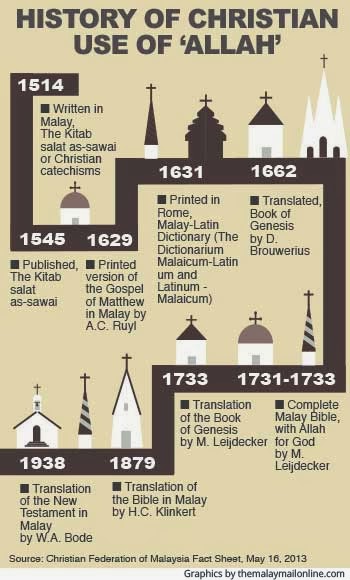
Allah Saga: It is Wrong to Deny Fundamental Rights on the Premise that Others May Be Confused


The Malaysian Bar is deeply concerned by the decision of the Court of Appeal delivered on 14 October 2013 in what is commonly referred to as the ‘Herald’ or ‘Allah’ case.

The concerns arise from the Court’s interpretation of Article 3(1) of the Federal Constitution on the status of Islam and other religions and Article 11(1) and (4) on the fundamental right to profess and practice a religion.

Any interpretation of the Constitution must invite the greatest scrutiny as it impacts on the fundamental freedoms guaranteed to all citizens. 

We are particularly concerned with the following findings, that:

I. The insertion of the words “in peace and harmony” in Article 3(1) is to protect the sanctity of Islam and “also to insulate against any threat…to the religion of Islam”;

Article 3(1) of the Federal Constitution expressly provides that “Islam is the religion of the Federation; but other religions may be practiced in peace and harmony in any part of the Federation”. 

The Court of Appeal found that this Article was inserted as a byproduct of the social contract by our founding fathers, and that the purpose and intention of the words “in peace and harmony” was to protect the sanctity of Islam as the religion of the country and to insulate it against any threat. This is an unnatural reading of the provisions in Article 3(1). The words in their clear and ordinary meaning provides for the right of other religions to be practiced unmolested and free of threats.

In referring to the social contract, effect should be given to the understanding as at 1957 and not to the numerous amendments that have since been made to the Federal Constitution in violation thereof. Paragraph 57 of the White Paper in 1957 which gave rise to Articles 3(1) and 11(4) of the Federal Constitution provides as follows:

“There has been included in the proposed Federal Constitution a declaration that Islam is the religion of the Federation. This will in no way affect the present position of the Federation as a secular State, and every person will have the right to profess and practice his own religion and the right to propagate his religion, though this last right is subject to any restrictions imposed by State law relating to the propagation of any religious doctrine or belief among persons professing the Muslim religion.”

II. The use of the word ‘Allah’ in the Malay version of the Herald would cause or create confusion amongst persons professing the religion of Islam;

It is unreasonable and contrary to the Constitutional scheme that a fundamental liberty is liable to be denied on the basis that some person or persons would be confused. 

The decision does not in any way aid in addressing or resolving the alleged confusion amongst persons professing the religion of Islam, when in fact that word ‘Allah’ is used by more than one community in this country and by peoples of different faiths in the Arab world and other Muslim countries. Rather, the effect of the decision would be to encourage a perpetual state of confusion or ignorance as justifiable grounds for denying the rights of others. The course that ought to have been taken should be to educate those persons who would be confused and not to restrict or injunct the exercise of rights by others.

III. The use of the word ‘Allah’ in the Malay version of the Herald would have the potential to threaten or harm public order and safety; and

Having recited that religious sensitivities are a threat to public order and safety, the decision unfortunately serves to reinforce the notion that the use or threat of violence would win the day in court. It is unacceptable that citizens are denied their Constitutional rights of religious freedom and expression on the basis that others who disagree or who are confused would resort to aggression.

The law should not be interpreted and declared so as to condone, encourage, and perpetuate such aggression and threats of violence. Rather, the law ought to be visited upon those who would resort to threats or violence. 

IV. The finding that the word ‘Allah’ is not an essential and integral part of the faith and practice of Christianity.

There appears to be no basis for the findings by the Court of Appeal that the word is not an integral part of the faith or practice of Christianity other than what has been described in the written judgments as “a quick research” and research conducted on the internet.

It is troubling that the court would conduct research on its own via the internet and come to conclusions of alleged facts with respect to a person’s religion without its veracity being tested.

In any event, it is for a party asserting exclusive rights to the use of the word ‘Allah’ to establish that they have such exclusive rights, rather than for others to have to establish that the use of the word is integral to their faith. By most accounts, there is no prohibition on the use of the Arabic word ‘Allah’ by peoples of different faiths in the Arab world and other countries. It is difficult to discern how we are able to declare exclusivity of a word over which we do not have proprietary rights.

The Malaysian Bar calls upon all quarters to address the issue with maturity and calmness. It must be reminded that everyone must respect the right of the publishers of the Herald to seek to appeal the matter to the Federal Court, if they so wish. They should be permitted to pursue this without any threats or intimidation.

Christopher Leong
President
Malaysian Bar

16 October 2013

We should not let the Allah issue be exploited by Umno or its media!


Pakatan Rakyat (PR) today said that it will not support the call for a ban on the use of the word "Allah" if it is used with good intentions, properly and not in a degrading manner. PR de facto head Datuk Seri Anwar Ibrahim said PR and Christians in general had been unreasonably attacked over the matter. "We should not let it (the Allah issue) be exploited by Umno or its media," he told a press conference today.

Although the Court of Appeal ruling on Monday prohibiting the use of the word "Allah" was limited to the Bahasa Malaysia section of the Catholic weekly The Herald, the implications on the grounds are far-reaching with some Malay rights groups calling for the ban to be extended to churches in Sabah and Sarawak.

Anwar said PR had referred the matter to religious experts, including PAS president Datuk Seri Abdul Hadi Awang, even before the ruling, and international Islamic scholars. PR will issue a statement today on the opposition coalition's joint stand on the word.

Meanwhile, Sarawak Dayak Iban Association (Sadia) secretary-general Nicholas Mujah said calls for the ban to be extended to Sabah and Sarawak are uncalled for. "Unlike in Peninsular Malaysia, the Sarawak Muslims are not confused and the Christians are also not confused with the usage of the word," he said when asked to respond to a call by Perkasa to extend the ban to the two states. He said the call is against the spirit of the 1963 Malaysia Agreement and the Cobbold Commission Report on the formation of Malaysia.

Sarawak Dayak National Union (SDNU) issued a statement that any ruling to stop Dayaks from using the word is tantamount to infringing Christians' constitutional rights. Its president, Tan Sri William Mawan Ikom, who is state social development minister, said it is also against the fundamental right to freedom of worship.

Sarawak Dayak Graduates Association (SDGA) president Dr Dusit Jaul said he agreed with state Land Development Minister Tan Sri Dr James Masing's stand that any ban on the use of the word is an infringement of the rights of Christians in Sarawak.

Constitutional lawyer Syahredzan Johan said the Court of Appeal's decision has set a precedent that may be used in the future to ban similar words or publications. He said in The Herald case, the home minister was acting under the Printing Presses and Publications Act 1984 (PPPA). "That is a federal law, which is also in relation to national security. That is why in the future, they may use PPPA to perhaps ban words in the Al-Kitab, the Bahasa Malaysia version of the Bible.

Meanwhile, Malaysian Gurdwara Council president Jagir Singh said the ruling will affect Sikhs in the country who also use the word in their prayers. "Since the (judgment) is wide, it will affect us. If you go by the ruling of the court, there is no exemption for anybody. It is blanket and will affect every publication (which uses the word Allah)," said Jagir.


International media reports:

By Jennifer Pak. Published by BBC News, Kuala Lumpur on 14 October 2013.

The verdict does not come as a surprise to the two million Christians in Malaysia. Many of them believe that the case stems from a tight race between the governing Malay-Muslim party, UMNO, and the opposition Islamic party, PAS.

The Allah ban is seen as an attempt by UMNO to boost its Islamic credentials and win back votes. It's an issue that crops up in the government-linked media ahead of an election and promptly dwindles after the vote.

Christians are so convinced that this issue is about political posturing that most followers say they will continue to use the offending Bibles and use the word Allah in their worship.

Not all Muslims back the ban. But one of the most outspoken supporters is an influential group called Perkasa, which is backed by former prime minister Mahathir Mohamad - a champion of Malay-Muslim rights.


Published by the National Editorial on 14 October 2013.

Like the history of most religions, the history of Islam is complex and much debated. But there are a few elements that are not in dispute, chief among them that the God of the Quran is the same as the God of the Bible and of the Torah before it. The mission of Islam, as expressed in the Quran, is not to bring a new faith, but to update the messages of the monotheistic faiths before it.

It is therefore surprising to see, as The National reports today, that a Malaysian court has ruled that a Christian newspaper may not use the word “Allah” to refer to God. The court overturned a previous decision by a lower court, ruling that “Allah” as a term is not exclusive to Islam. This causes a problem for the country’s substantial Christian minority, who have used the word “Allah” to refer to God for decades.

In a fellow Muslim country with substantial Christian and Hindu populations, this feels like the wrong decision. The UAE is rightly proud of its society that allows people from all over the world to practise their faiths openly and without discrimination. Indeed, that inclusiveness is inherent in Islam. One of the reasons Islam was able to spread so far, so rapidly, was the inclusive nature of the faith: for at least two centuries after the coming of Islam, the Arabs ruled vast regions where the majority were not Muslims. The word “Allah” is never exclusive to Islam – indeed, both Christians and Jews used the word “Allah” to refer to God even before the coming of Islam.

That remains the case today. When Christians across the Middle East pray to God, they use the term “Allah”. Walk into a church in Cairo, Baghdad or Beirut this coming Sunday and you will hear the name of “Allah” invoked. That also applies to the Jews of the Arab world, who for centuries have prayed to “Allah”. The Quran itself is explicit on this subject, declaring, in Surah Al Ankabut, that Muslims should tell People of the Book (Christians and Jews) that “our God and your God is one”.

The Malaysian decision overlooks not merely the theology, but also the etymology of the word. The word “Allah” is derived from the Arabic “al-ilah”, the god. It’s found its way across the world and entered Malay from Arabic.

Arabic as a language is a vehicle for faith, be that Christianity, Judaism or Islam. The God of the three monotheistic religions is the same god. It is unsurprising, therefore, that all three faiths in the Arabic-speaking world (and beyond) refer to God as “Allah”. And if they have the same God, they should have the right to call their deity by the same name.

Link:
http://www.thenational.ae/thenationalconversation/editorial/word-allah-is-not-exclusive-to-islam?fb_action_ids=10151976505061974&fb_action_types=og.recommends&fb_source=other_multiline&action_object_map=%7B%2210151976505061974%22%3A1427094640843412%7D&action_type_map=%7B%2210151976505061974%22%3A%22og.recommends%22%7D&action_ref_map=%5B%5D

By Endy M. Bayuni, published by The Jakarta Post on 16 October 2013.

The controversy in Malaysia started when Muslims raised objections to the use of the word Allah by the Roman Catholic Church in its publications. Although the lower court already ruled in favor of the church in 2009, the Malaysian government decided to take up the issue on behalf of Muslims and appealed. Not surprisingly, this week it won the case, ironically on the eve of the Muslim’s Sacrifice Day.

The controversy on the use of the word “Allah” goes beyond semantics, or else it would not have provoked such emotional reactions from all sides concerned.

And it is a debate that sooner or later will come to Indonesia, for the seeds of exclusivity have already been deeply planted among Muslims in the country with the world’s largest Muslim population. Like their Malay Muslim brothers, Indonesian Muslims who share the same Malay root language, translate the phrase Lailaha Illallah to Tiada tuhan selain Allah (in English: No God but Allah), instead of the literal translation “No god but God”.

Something quite fundamental is lost in the translation when Indonesians make a distinction between “God” and “Allah”, two words that essentially mean the same thing. But this erroneous translation may have become the basis that put Muslims in much of Southeast Asia to claim exclusivity to God.

I am no historian, so I do not profess to know the reason for the translation, but since this part of the world was predominantly Hindus and Buddhists before Islam came in the 14th century, the distinction between Allah and God may have been important in helping to convert people who then believed in many deities.

The late Islamist scholar Nurcholish Madjid drew sharp rebukes when he suggested that Indonesians should translate the term to “No god but God”, so the idea was dropped prematurely. Exclusivity to the claim of God is equally strong in Indonesia, if not stronger, than in Malaysia.

Indonesia has had its share of debates on Islam’s claim to exclusivity, including whether non-Muslims should be allowed to say the traditional Islamic greeting assalamu’alaikum (which means peace be upon you) and other popular Islamic expressions such as Alhamdulillah (praise be to God) and Insya Allah (God willing).

It’s only a matter of time before someone takes the cue from Malaysia and starts raising objections to non-Muslims using the word Allah. The problem with religious exclusivism is that it breeds intolerance, which leads to prejudices against the others.

Indonesia and Malaysia may rightfully claim to have developed a more moderate strand of Islam, and history has actually proven that Muslims in this part of the world to be more tolerant when compared to their brothers and sisters in Islam’s place of origin in the Middle East or in South Asia.

But there is only a thin line dividing tolerance and intolerance, so we should not take this moderation for granted. With the rising exclusivism that the Muslim majorities in these two countries are pushing, we may be witnessing the Islam in Malaysia and Indonesia becoming less and less tolerant. In fact, it may already be happening.

Which begs the question: Is there anyone in this country that is pushing for more religious inclusivism? Insya Allah.

Read more here:
http://m.thejakartapost.com/news/2013/10/16/no-one-has-monopoly-claim-god-on-use-allah-malaysia.html

Monday, October 14, 2013

Allah case: Church to fight on


The Herald will appeal the appellate court's decision to set aside the High Court's ruling permitting it to use the term "Allah" in its publication. Saying this, the weekly's editor Father Lawrence Andrew, said the Court of Appeal's decision contradicts government policy.

Referring to the Catholic Church's argument that the Malay-speaking congregation commonly used the term in reference to God, Lawrence said: "We cannot reconcile how on the one hand the Christian community is allowed to freely use, import and distribute the Al-Kitab which uses the word 'Allah' extensively, by virtue of the govt's 10-point solution for their worship and instruction of their prayer."

"It is also a retrograde step in the development of the law into the fundamental liberties of religious minorities in this country," he told reporters outside the Palace of Justice here today. "In our view, the Court of Appeal ought to have interpreted the Federal Constitution in order to uphold rather to diminish the rights of the minorities," he added.

Disappointed that the decision to set aside the earlier High Court judgment which ruled that it was against the Church's constitutional right to discontinue using the term, the priest insisted that evidence submit during the course of the trial had showed that the word "Allah" is not exclusive to Islam. 

"It goes against evidence itself and by the use of the word by the Christians is a danger to public order is not proved yet till today," he said after a three-man bench read out the gist of the judgment this morning. 

Justices Datuk Seri Mohamed Apandi Ali, Datuk Mohd Zawawi Salleh and Datuk Abdul Aziz Abdul Rahim had unanimously ruled that the home minister, in banning The Herald from using Allah in its Malay edition, had made a decision in the interest of safeguarding public order. The judges also state that no constitutional right was infringed in the process and that the word "Allah" is not an integral part of the Christian faith. 

The Church, in its submissions, had stated that the Malay edition of the publication citing excerpts of the Al-Kitab, a translation of the Bible in Bahasa Malaysia. "We have not caused disharmony, for the 18 years of The Herald's publication, we have not caused any inconveniences," asserted Lawrence. "So we feel that this is unrealistic, given that the use of the word 'Allah' by Bahasa Malaysia- speaking congregation and other indigenous groups especially in Sabah and Sarawak for generations," he said.  

"We are not discouraged by this decision. We trust in God, justice will be served. We will appeal," said Lawrence. 

Link:
http://www.fz.com/content/herald-appeal-decision-contradicts-government-policy#ixzz2hgPhR9UK

To what extent will Prime Minister Najib Razak now push the issue remains to be seen. However, there is already deep concern he might seize on the ruling and use the precedent to force Christian groups into surrendering more of their rights whenever it was politically beneficial to him, or whenever he wanted to curry favour with the Muslims.

Some even fear that the Muslim extremists or ultras in Malaysia, flushed by today's victory, might get more demanding. This would set the stage for a collision course with the Christians, especially those from Sabah and Sarawak. The already high racial and religious disunity is bound to rise at least by another notch and this could destabilize Malaysia even more.

Nasharuddin was among those who attended the hearing at the Palace of Justice in Putrajaya this morning. Ibrahim Ali, the head of ultra Malay rights group Perkasa too was present. However, the Muslim NGOs while noisy and emotional failed to gather more than 200 or so protesters. Shouts of Allahu Akbar or God is Great cut through the cool morning breeze outside the grand court complex, while group prayers were also held. When the government's lawyers came to announce the decision, they were greeted like heroes.

Read more here:
http://www.malaysia-chronicle.com/index.php?option=com_k2&view=item&id=174491:catholic-magazine-herald-denied-the-right-to-use-allah-by-malaysias-appeals-court&Itemid=2#axzz2hh7V2U3M

But Khalid said that rather than banning the use of ‘Allah’ by non-Muslims for fear of retaliation by “stupid people”, the government should focus on educating the Muslims on what the Quran said over the issue. “The government should educate Muslims regarding all the verses of the Quran which mentions non-Muslims discussing about Allah with the Prophet Muhammad, and using the word freely without any hindrance whatsoever,” the Shah Alam MP said. “Instead, our government seems to be very proud that we are the only Muslim nation that practices this ban – that we are going beyond even what the Prophet Muhammad had done...”

He rejected Department of Islamic Development’s (Jakim) line of argument that allowing non-Muslims to use ‘Allah’ would threaten the faith of Muslims, saying: “It’s just like how everybody uses the word ‘God’ and ‘Tuhan’. There’s no confusion there.” On the contrary, Khalid insisted that opening up the word ‘Allah’ to other religions would build a common platform among the country’s different believers, and hence encourage interfaith discussions.“The question of pluralism also doesn’t come into play because the Quran says the only religion accepted by Allah is Islam,” he added.

Khalid also maintained that the issue was political rather than religious – he claimed that right wing Malay groups were championing the cause to make Islam exclusive to Malays and erect barriers between themselves and the non-Muslims in the country. “They want to maintain special position, hegemony in the country… they want to distance the Malays from the non-Malays in the country, so that issues such as good-governance, which is supported by non-Malays, does not become a matter of interest for the Malays,” said Khalid.

Read more here:
http://www.freemalaysiatoday.com/category/nation/2013/10/14/we-respect-allah-ruling-but%E2%80%A6/

Sarawak will continue to allow the use of the word Allah in Bahasa Malaysia and native language Bibles and church publications, said State Land Development Minister Tan Sri Dr James Masing, following the Court of Appeal's ruling today not to allow Catholic weekly The Herald to use the term.

Masing described the ruling as “not genuine”, saying the use of the word Allah predated Islam. “We (Christians in Sabah and Sarawak) have been using the word Allah for over 100 years. Why suddenly we are now told we cannot use it?" he asked, adding that the court's decision would have a negative impact on non-Muslims beyond Sabah and Sarawak. “Did they have a dream that Allah said they (the Christians) can't use the word Allah?” he asked, referring to the opposition by some Muslim groups in West Malaysia on the usage of the word in Christian texts.

Referring to Muslims in Sabah and Sarawak as "brothers", Masing said they had no qualms about Christians using the word. Masing reminded Christians in the state that Sarawak Chief Minister Tan Sri Abdul Taib Mahmud had in the past weighed in on the issue by giving assurance that he would not stop them from using the word Allah.

PKR Sarawak chief Baru Bian, saying he was stunned by the decision, said churches and Christians in Sabah and Sarawak would continue using the word Allah. “I am stunned by the decision.

We have produced very clear facts that we were promised a guarantee by our forefathers when Sabah and Sarawak helped form Malaysia. The ruling appears to go against the fundamental rights that were promised," said Baru, adding that the decision goes against the Malaysia agreement.

Baru, a church elder of the Kuching Evangelical Church for over a decade until he joined politics, said the ruling went against Article 11 of the Federal Constitution which allows people to profess and propagate their religious beliefs.

Read more here:
http://www.themalaysianinsider.com/malaysia/article/its-worship-as-usual-sarawak-christians-will-continue-use-allah-state-minis

Reverend Dr Herman Shastri, general secretary of the Council of Churches Malaysia (CCM), who was also present in court, expressed disappointment with the ruling, saying that he did not agree with the argument that the word "Allah" was not integral to Christianity.

"The learned judges obviously did not take into consideration that the Christians in Sabah and Sarawak and Malay-speaking Christians in Peninsular Malaysia have been using the word even before Independence," he argued.

He explained that Christians in the Middle East and Indonesia have been using the word "Allah", adding that the word predates Islam. "Even in the Quran it is mentioned that the Christians and Jews believe in Allah, which explains why PAS had also said that Christians can use the word. "But here, the judges made a ruling without calling expert evidence. This is very disappointing," added Shastri.

He said the CCM could not understand the "public order" argument accepted by the court. "The people in East Malaysia have been using the word and they have been living in peace, so what public order are they talking about? Just because a few extremists are making a big issue of this does not make it a national security issue," he said. Shastri noted that Putrajaya's 10-point solution to Christians in Sabah and Sarawak had not affected public order.

Read more here:

Whatever the High Court rules on the “Allah” issue today, churches in Sarawak like this one that conduct their services in the native languages have no plans to change the way they worship, with many saying that “Allah” will continue to be used in their prayers.

At this church in Kampung Tabuan yesterday, which caters to the largely Iban villagers in the surrounding areas, the service was conducted in Iban. The liturgy alone – the booklet that sets out the fixed set of Eucharistic rites and words to be used in worship – contained no fewer than 80 of the words “Allah Taala”, which means God Almighty in Iban. The word was also used in the hymns and in the sermon of Reverend Nelson Sinken.

The secretary of the Parochial Council of Churches, Maxwell Landong, told The Malaysian Insider after the service, “Since I started going to church, the words Allah Taala have been used by the church to refer to God. It’s our language and there are no other words I know that were used to refer to God.”

He added, “We have been using Allah in our liturgy, our Iban-language Bibles, publications, prayers and sermons for as long as I can remember. The Muslims in Sarawak have accepted that. So what is the fuss? Why now?” He pointed out that if the court ruled against the Catholic Church’s use of the word, it would be difficult to enforce the ruling here. He said that on a personal basis he would still pray to Allah Taala and read Bibles that use the word Allah to refer to God “no matter what the court says”.

For his part, Reverend Sinken was sanguine on today’s highly anticipated Court of Appeals decision on the dispute between Christians and certain Malaysian Muslim authorities over the use of the word. “I'm not worried,” Reverend Sinken said. He did not offer prayers for divine intervention or speak on the subject in his sermon. Echoing the exact sentiments of Landong, Reverend Sinken said of the Christians, “We in Sarawak have been using the word Allah for years without problem. It’s also our language. I'm sure the court will take all those into consideration.”

Like the majority of the churchgoers here yesterday, Dorothy Gregory is optimistic that the court will decide in the favour of “what is fair and just”. There are many similar words in the Iban and Malay languages. For example, “hutan” (jungle) in Malay is “utan” in Iban. “Jalan” (walk) in Malay is “jalai” in Iban and “makan” (eat) in Malay is “makai” in Iban.

When asked what could happen if the court ruled that Christians cannot use the word “Allah”, both Landong and Reverend Sinken said it would be up to the Archbishop to determine what they should do next.

Datuk Bolly Lapok is the Anglican Archbishop for Sarawak and Brunei.

Earlier, Bishop Lapok, as chairman of the Association of Churches in Sarawak, said the association “finds it unacceptable that practice of the Christians in Sabah and Sarawak who for generations had used Allah in worship, long before the very idea of Malaysia was conceived, is now held as unlawful by the government”.

He said that to stop saying Allah in the practice of their faith would be tantamount to a block on religious freedom. He added, “This is abhorrent, wholly unacceptable and a flagrant betrayal of the Malaysia Agreement, which guaranteed the inalienable rights of non-Muslims in Sarawak and Sabah to religious freedom.Lapok said the churches expect the federal government to abide by the Federal Constitution, which guaranteed religious freedom. He said the native churches will continue to use Bibles with the word Allah as it was “their fundamental right”.

He reminded the government that people in Sabah and Sarawak were promised the right to practise their religion when Sabah and Sarawak were courted to join the Malay states of Malaya to form Malaysia. He said the government must respect and abide by that promise.

Read more here:
http://www.themalaysianinsider.com/malaysia/article/inside-a-church-a-hundred-times-the-sound-of-allah

The Court of Appeal’s ruling on the “Allah” issue exposes the rights of Malaysia’s religious minorities to oppression under the guise of appeasing the majority, lawyers said today.

In expressing its disappointment at the appellate court’s ruling, the Catholic Lawyers’ Society said the voices of moderation appeared to be “drowned out” by the religiously intolerant, stressing that the minorities’ rights in Malaysia must be protected.

“To find that the minority must yield to the majority also sends a frightening message that the minorities’ rights are subject to the whims and fancies of the majority.

The minorities rights to freedom of religion are enshrined in the Federal Constitution and must be upheld at all times and not oppressed by the majority,” the Catholic Lawyers’ Society wrote in a press statement signed off by its president, Viola De Cruz Silva.

Read more here:
http://www.themalaymailonline.com/malaysia/article/lawyers-allah-appeal-opens-door-to-oppression-of-religious-minorities

Wednesday, July 3, 2013

Singapore: 3rd Plague


The promise of moderate to heavy thundery afternoon showers after a week of haze, brought another weather surprise - hail!


Many Channel NewsAsia users sent photos and even videos of the tiny ice pellets that rained down in various parts of Singapore, from Jurong to Bukit Batok, and Choa Chu Kang.

The National Environment Agency says the hail in Singapore was not caused by cloud-seeding in Indonesia, and the rain in other parts of the island is not toxic.
Accordingly, hail is actually less common in the tropics (Such as Singapore) despite a much higher frequency of thunderstorms than in the mid-latitudes because the atmosphere over the tropics tends to be warmer over a much greater depth. Hail is also much more common along mountain ranges because mountains force horizontal winds upwards (known as orographic lifting), thereby intensifying the updrafts within thunderstorms and making hail more likely.
"You still set yourself against my people and will not let them go. Therefore, at this time tomorrow I will send the worst hailstorm that has ever fallen on Egypt, from the day it was founded till now." Exodus 9: 17-18

Tuesday, June 18, 2013

Singapore: 2 Plagues And 2 Prosecutions

The Plagues

Singaporeans woke up to another day of haze on Tuesday as the Pollutant Standards Index (PSI) hovered at 121 at 10am. The National Environment Agency released figures showing the country's air quality at 8am to be in the unhealthy range of 109-122. Anything above 100 is unhealthy. NEA figures showed the South region of Singapore to be the worst hit. The haze was the worst in 16 years at 10pm on Monday, with a PSI reading of 155, before dipping slightly to 145 at midnight.

Concerned readers of The Straits Times have sent their photos in showing Singapore, from Tanjong Pagar to Jurong East Central, shrouded in smog. Reader Yap Siew Meng, who sent in a photo montage taken on Monday, said that the haze was so bad that he could not open his eyes fully. Urged reader Joanne Hong: "The Government needs to do something. This is very bad for our children.”

Extracted from: 

The number of people with dengue has crossed the five figure mark with 10,258 cases diagnosed by 3pm on Monday. But the rise in infections appear to have plateaued last week, with 813 cases - or two fewer than the week before. Minister for the Environment and Water Resources Vivian Balakrishnan had said last week that projections by the National Environment Agency had predicted 960 cases last week.

Singapore has just entered the hot season when mosquitoes breed faster and are more able to spread the disease. This morning, Dr Leo Yee Sin, head of the Communicable Disease Centre, said it was likely for the number of cases to exceed 15,000 this year.

Extracted from:

The Prosecutions

The case that has thrown the shameful failings of a core state institution into relief is that of Professor Tey Tsun Hang, who stands accused of accepting sexual favours and gifts from a student in exchange for better grades…

His academic work has been very critical of the Singapore government, also focusing in great detail on the failings of the judicial system and highlighting its shameful subservience to the overbearing powers of the Executive. 

Tey’s publications are well respected and have found a ready audience internationally, where it is harder to suppress the freedom of academic inquiry, and where ideas require true merit to become popular. [One of his article: http://singaporeconsensus.wordpress.com/2012/04/02/excluding-religion-from-politics-and-enforcing-religious-harmony-singapore-style/]

Of course, being a crusader for a clean judiciary does not automatically absolve an individual of criminal charges. The question then becomes whether it is true that Tey accepted favours in exchange for giving better grades.

In order to prove their case, the prosecution would have to prove that he had sexual relations with this student, accepted her gifts, and in turn gave her better grades than she deserved. The defence focused on disproving the last two of these accusations. 

Firstly, it relied on evidence in the form of cheques issued in payment of the gifts that were allegedly given by the student. These cheques proved that Tey had himself paid for the items in question. Secondly, it relied on detailed academic records audited by National University of Singapore (NUS) staff, which clearly indicate that the grades the student received from Tey were completely in accordance with the quality of her work, and were marked according to the exact same standard as that of other students in the class.

These two pieces of evidence should have immediately cleared Tey of any corruption charges. If it can be proven that there were sexual relations between him and the student, then this would constitute a clear and shameful breach of ethics and professionalism. It would then warrant internal discipline proceedings at the NUS level, without sufficient evidence or cause to institute criminal proceedings. 


Alleged sham investments by the City Harvest Church — a registered charity  — came under the spotlight as prosecutors questioned their first witness, Lai  Baoting, the church’s former assistant accountant. Through Lai’s testimony they tried to show that the church’s finance  manager and fund manager were involved in the investments.

The pastor and founder Kong Hee, 48, and five officers have been charged  with varying degrees of involvement in a scheme to siphon off Sg24 million  (19 million) to finance the singing career of his wife, who goes by the name  Sun Ho in the music industry. In addition, more than Sg26 million in church money was allegedly misappropriated to cover up the original diversion…

Edwin Thong, one of the defence lawyers, said Thursday that an external auditor did not question the authenticity of the investments. The six accused appeared light-hearted, whispering and smiling at some  points during the hearing.

“Christian, remember the goodness of God in the frost of adversity,” Kong tweeted after the court adjourned Thursday, quoting from 19th century British preacher Charles Spurgeon.

Scores of church members trooped to the court for a second day Thursday to  lend their support, with some queuing from 4.30 am to ensure a seat. The church, which has a membership of more than 30,000, has affiliates in  neighbouring Malaysia and other countries. It is known for services that resemble pop concerts and had assets  estimated at more than Sg100 million in 2009. The pastor’s wife, now in her early 40s, was hoping international stardom  would help spread the church’s message, according to previous reports in the  Singapore media.

Read more here: 

In 1993, Dr Chee Soon Juan was sacked by his employer the National University of Singapore for allegedly using research funds to send his wife’s doctoral thesis to the United States. Just a few months earlier, he became the first Singaporean academic to join an opposition party and contest in the general election.

Wednesday, January 23, 2013

Anwar menang saman terhadap Utusan


Oleh Aisha Geoffrey. Diterbitkan oleh Keadilan Daily.

KUALA LUMPUR 21 Januari 2013: Ketua Umum KEADILAN, Datuk Seri Anwar Ibrahim hari ini menang kes saman fitnah RM50 juta terhadap Utusan Melayu Bhd dan ketua pengarangnya berhubung artikel berkaitan temu bualnya yang disiarkan oleh BBC tahun lalu. Keputusan penghakiman itu dibacakan Hakim Mahkamah Tinggi Kuala Lumpur, Datuk VT Singham di sini pagi ini.


Utusan didapati bersalah memfitnah Anwar kerana menuduh beliau menyokong pergerakan lesbian, gay, biseksual dan transeksual (LGBT). Singham memutuskan artikel itu bersifat fitnah dan bertujuan menjatuhkan reputasi Anwar sebagai pemimpin politik. Beliau berkata, keputusan itu dibuat kerana mengambil kira fakta dan bukti yang dibentangkan sepanjang perbicaraan, menunjukkan Utusan dipunyai oleh Umno.

“Artikel tersebut adalah terpesong, tidak tepat dan di luar maksud yang diperkatakan,” kata Singham dalam penghakimannya. Keputusan itu merujuk artikel bertajuk ‘Tolak Anwar-Hassan’ yang disiarkan muka depan akhbar kawalan Umno itu pada 17 Januari 2012.

Anwar memfailkan fitnah terhadap Utusan dan Ketua Pengarangnya, Datuk Abdul Aziz Ishak 20 Januari tahun lalu, yang didakwanya telah mencetak dan menerbitkan berita berhubung komen beliau bersama BBC mengenai undang-undang berkaitan dengan homoseksual.

“Mahkamah berpuas hati (dalam artikel tersebut) bahawa ini adalah fitnah kepada plaintif,” kata Singham. Menurutnya, Utusan tidak mengamalkan kewartawanan yang bertanggungjawab. Sedangkan katanya, defendan mempunyai peluang untuk membetulkan fakta selepas Anwar menghantar notis peguam untuk keterangan.

“Wartawan dan editor mempunyai hak untuk menyiarkan berita, tapi bukan fitnah, atau berita palsu,” tempelak Singham dalam penghakimannya. Katanya, hakim memainkan peranan penting dalam memastikan kebebasan badan kehakiman.

“Keadilan perlu dilaksanakan tanpa dipengaruhi mana-mana pihak mahupun parti politik, semua keputusan perlulah selari dengan fakta yang dibentangkan,” jelas Singham. Beliau mengarahkan Utusan membayar gantirugi kos sebanyak RM45,000 kepada Anwar manakala pampasan damage (teruk) ditetapkan ke satu tarikh kemudian.


Tuesday, November 13, 2012

Anti-bullying Campaign Turned Into Blatant Homosexual Agenda


BY PETER BAKLINSKI.


HAMILTON, Ontario, November 9, 2012, (LifeSiteNews.com) – Parents and ratepayers in a Hamilton area school board will never know exactly what a homosexual activist told their children during a Gay-Straight Alliance (GSA) assembly a year ago.

The Information and Privacy Commissioner (IPC) of Ontario upheld last week the decision of the Hamilton-Wentworth District School Board (HWDSB) to “deny access to the record” of the speech. Suresh Dominic of Campaign Life Catholics told LifeSiteNews.com that parents of school children should be “outraged that they have been denied the right to know what is being taught to their children.”

Last November, a certified teacher named Laura Wolfson was invited as a guest speaker at a school-wide GSA held at Parkside High School in Dundas. Wolfson reportedly identified herself to the 400 students as a lesbian “youth worship leader” from a synagogue and held herself out to be an authority on Old Testament Scripture. Wolfson allegedly sought to discredit Catholic teaching on homosexuality by suggesting that since the eating of fish on Fridays was no longer adhered to, neither should biblical teachings on homosexuality.

She allegedly began her treatment of Scripture by providing a definition of the word “abomination,” after which she pointed out that two offenses other than homosexuality were labeled “abominations” in the Bible. They were “not keeping the Sabbath holy” and “getting drunk”. Wolfson suggested that since no one would condemn these two acts as “abominations” today, then it made no sense to condemn homosexual acts either.

Parents, ratepayers, and pro-family groups were outraged that school officials invited a speaker who publicly discredited Judeo-Christian beliefs. Many saw this as a foretaste of what Premier Dalton McGuinty’s newly proposed anti-bullying legislation, Bill 13, would bring into the schools. Critics warned that McGuinty’s bill concealed a radical agenda that would trample religious freedom and parental rights.

Parents, ratepayers, and pro-family groups demanded to know what exactly these children had heard.

Last March, LifeSiteNews.com filed a request to the HWDSB asking for a copy of Wolfson’s speech, which the HWDSB admitted to having. HWDSB denied the request in May, saying that releasing the speech would constitute an “unjustifiable invasion of personal privacy”. LifeSiteNews appealed that decision, filing a Freedom of Information request with the IPC on behalf of parents, ratepayers, and pro-family groups, again asking for Wolfson’s speaking notes to be released.

In the appeal, LifeSiteNews argued that there was “no reason why the contents of the speech should be kept private” since it was “publicly delivered” in front of students and staff at a public high school funded by tax dollars.

“It defies reason that what has been presented to school children and staff at a publicly funded school during a school wide assembly should be kept hidden from parents of school children and ratepayers in the HWDSB district,” wrote LifeSiteNews in a submission.

But IPC adjudicator Stella Ball sided with the HWDSB, preventing the release of Wolfson’s speech. Ball, in her decision dated October 31, wrote that she was “not convinced” that “compelling public interest in disclosure arises out a need to know what publicly funded school boards are teaching students.”

Ball also stated that since the speech mentions “the affected party’s sexual orientation and religious beliefs and associations” its release would “constitute an unjustified invasion of the affect party’s personal privacy [according to section 14 of the Municipal Freedom of Information and Protection of Privacy Act].”

Steve Jalsevac, managing director of LifeSiteNews, said he was “not impressed by the heavy freedom of information red tape that seems intended to discourage citizens and media from obtaining information they have a right to.” “After repeated efforts, using every possible channel to get the information we sought and following all the proper procedures, we have been denied, denied, denied,” he said. Jalsevac pointed out the system appears to allow “manipulative persons” who might be operating within the context of a “homosexual ideology” to “withhold information they have no right to withhold.”

Geoff Cauchi, legal council for LifeSiteNews, told LifeSiteNews that the IPC commissioner may have “committed an obvious ‘error of law’ in its finding that there is no ‘compelling public interest in disclosure’ in this case.”

“It seems to be that there is an obvious public interest in disclosure where there are serious allegations that a public high school, by sponsoring the speech of the speaker, has committed a breach of the Education Act, and/or infringed upon the Charter right to freedom of religion of the students and their parents,” he said.

Cauchi said that the budget for a “judicial review” that would challenged IPC’s decision would be in the neighborhood of $15,000. The cost prohibits LifeSiteNews.com from pursuing the matter further. Suresh Dominic called IPC’s siding with the HWDSB “proof that a shroud of secrecy and deceit is being thrown over what appears to be a blatant homosexual agenda for school children.”

Dominic pointed out that “these violations will continue to happen in our schools unless parents band together and demand transparency and accountability.” “Parents must not be hoodwinked by the radical sexual agenda that homosexual activists have in store for their children. Parents and other tax payers must take back the schools for their kids,” he said.

Link: 

Wednesday, August 1, 2012

City Council Loses Appeal in 'Chapel Demolition' Case


Published by Malaysiakini on 30 July 2012. By Hafiz Yatim.

The Court of Appeal in Putrajaya has struck out an appeal by the Johor Baru City Council (MBJB) over the demolition of an Orang Asli chapel, describing the application as an abuse of the court process.

The three-member bench headed by Justice Syed Ahmad Helmy Syed Ahmad, along with Abdul Wahab Patail and Abdul Aziz Abdul Rahim, was unanimous in the decision. 

The court also ordered MBJB to pay RM10,000 in costs.

In September 2010, the Johor Bahru High Court had ordered the MBJB to pay damages to Khalip Bachik, Kelah Lah and 49 others of Kuala Masai, Johor, following the demolition of their chapel. 

Khalip had filed the civil suit in December 2008 against the MBJB, Johor Land and Mines Department and the Orang Asli Affairs Department (JHEOA).

The MBJB failed to file affidavits in defence despite reminders being sent, and then failed to enter an appearance when the hearing dates were fixed. As a result, the council was ordered to pay damages.

It appeared alone in its appeal today. The other two appellants will have their application heard next week.

The council had claimed that the suit had been filed under the ‘Johor Bahru Town Council’ and not ‘Majlis Bandaran Johor Bahru’. Hence, it was not bound by the order imposed by the Johor Bahru High Court.

Khalip's lawyers argued to strike out the application, saying the appeal proper was incompetent and that the memorandum of appeal was defective. This made the appeal frivolous, vexatious and an abuse of the court process.

The Orang Asli were represented by Steven Thiru and Aron Matthews, while Roger Tan and CP Lee appeared for the appellants.

Permission given for place of worship

Khalip and others are of Orang Asli Laut descent and members of the Orang Asli Christian congregation. They were originally residents of Kampung Orang Asli Stulang Laut.

They received a directive to move to Kampung Orang Asli Kuala Masai from the Johor Bahru City Council in 1993 on the ground that the site they occupied was to be developed.

Khalip and Kelah claimed that the JHEOA director-general had given them an assurance that they could build a place of worship at the new settlement, and had done so upon relocation in 2003.

When the demolition was carried out in 2005, the state failed to show any court order or proof that the chapel was sitting on state land.

Eight of the 20 families living in Kampung Orang Asli Kuala Masai are of the Christian faith.

Friday, July 27, 2012

High Court denied Lynas’ the injunction to gag NGO

Posted by MSN News on 27 July 2012.

Save Malaysia Stop Lynas (SMSL) releases a press statement on the High Court's decision: http://news.malaysia.msn.com/regional/high-court-denied-lynas%E2%80%99-the-injunction-to-gag-ngo


The press statement reads:

"SMSL was pleased that the Kuala Lumpur high court has rejected Lynas' second attempt to get a court injunction to gag SMSL yesterday. Over a hundred concerned citizens consisting of Kuantan residents, supporters from interstates and civil society organisation's representatives congregated at the high court vicinity peacefully with placards and banner in a show of solidarity to express their outrage with the Lynas' defamation action.

"It is heartening and encouraging seeing justice delivered at this juncture. We are relieved that our freedom of speech to voice our concerns with our own government in the interest of the public and the country is upheld through yesterday's high court decision." Lamented Mr Tan Bun Teet, a SMSL spokesperson, a Kuantan resident and a defendant named in the defamation suit.

"Here we are dealing with a world-scale rare earth plant at least ten times bigger than the one in Bukit Merah with hundreds more times hazardous waste. It has been built without any consultation with the public, with lax environmental safeguards and speedy approval processes. What more it is located in a swampy area so close to the sea and the population? We as informed citizens cannot simply sit back and do nothing" Continued Mr Tan

The high court awarded a court cost of RM5,000 to SMSL against Lynas and the court will resume on 14th August to work out details of future trials and hearings.

The fair judgment delivered by Judge John Louis O'Hara is a much welcome gesture of hope for SMSL and concerned Malaysians who have fought hard to stop the Lynas rare earth project since it became widely known for the first time last March through a New York Times article.

Haji Ismail Abu Bakar, another defendant named in the Lynas suit and a Kuantan resident remarked, "many rakyat (citizens) who will be directly and most immediately put at risk once the Lynas plant starts to operate are at no liberty to speak out or to voice their concerns. We breathe a sign of small relief for now but we have a long way to go yet to keep our country safe and clean from toxic pollution."

Last Thursday on the 19th, the court heard arguments from both Lynas and SMSL counsels. SMSL was represented by senior counsel Datuk Bastian who argued that SMSL acted in the interest of the public in issuing the open letter to the Prime Minister which Lynas alleged is defamatory.

"SMSL will brief its various expert witnesses in Malaysia and overseas in preparation for the trial. SMSL aims to use the trial to reveal information in its possession. We have independent opinions and assessments from various highly qualified professionals. We would like to inform the court and the public of the risks and hazards of the Lynas project to our communities, our livelihoods and the local economy as well as Malaysia as a whole."

Explained Mr Tan.

For further comments, please contact:
SMSL Hotline :+60 (0) 12-982 3302

Wednesday, June 16, 2010

Case #1: All Is Not Lost!

This article What are we teaching our young women? reminds me of a client.

He has passed away a few years ago hence this posting is not going to hurt his ego anymore. He was a widower. Saved every sen he earned but spent on cigarettes and beer. Met a woman of his dream, so he thought. You know, the feline type, wears skimpy blouse and shorts, purrs and loves close physical contact. Thirteen years younger than him. Registered their marriage against all the good old advice of his children and his drinking pals. What did they know? Love transgresses age gap. It’s between 2 consenting adults therefore the rest go fly kites!

Here comes the juicy part. The woman would ask for something from my client, usually right after he got his conjugal rights. Among others, an insurance policy for her benefit, a car under her name and a loan under my client’s name for her house. As he was talking, I could see where it was heading to and it was obvious to me that my client couldn’t see it then. Poor man!

As I’ve foreseen even before he has gotten down to the real issue, he was squeezed dry by her, physically [wink wink wink] and financially. Logically, she moved on to another “target” a.k.a. idiot/moron (I don’t mean mentally challenged though it’s close). I can’t believe there are so many targets these days. My client wanted to know how to recover his loss. I had to muster all the years of my discipline and training as a lawyer to control myself from bursting out with laughter and clapping my hands.

Anyway, I’ve successfully recovered part of his loss from that feline. As I recollect, the fees I charged him must’ve caused further loss and suffering. He didn’t complain though. I wanted to tell him this but didn’t have the courage, “You never suffer any loss, actually it’s just that you’ve overpaid for the sex. You had your share of fun so you shouldn’t complain”.

There, I’ve gotten it out of my chest after all these years! I’m sooo relieved...

Here is wisdom from Jesus for those who want to receive: Matthew 7:12 “So in everything, do to others what you would have them do to you, for this sums up the Law and the Prophets”.