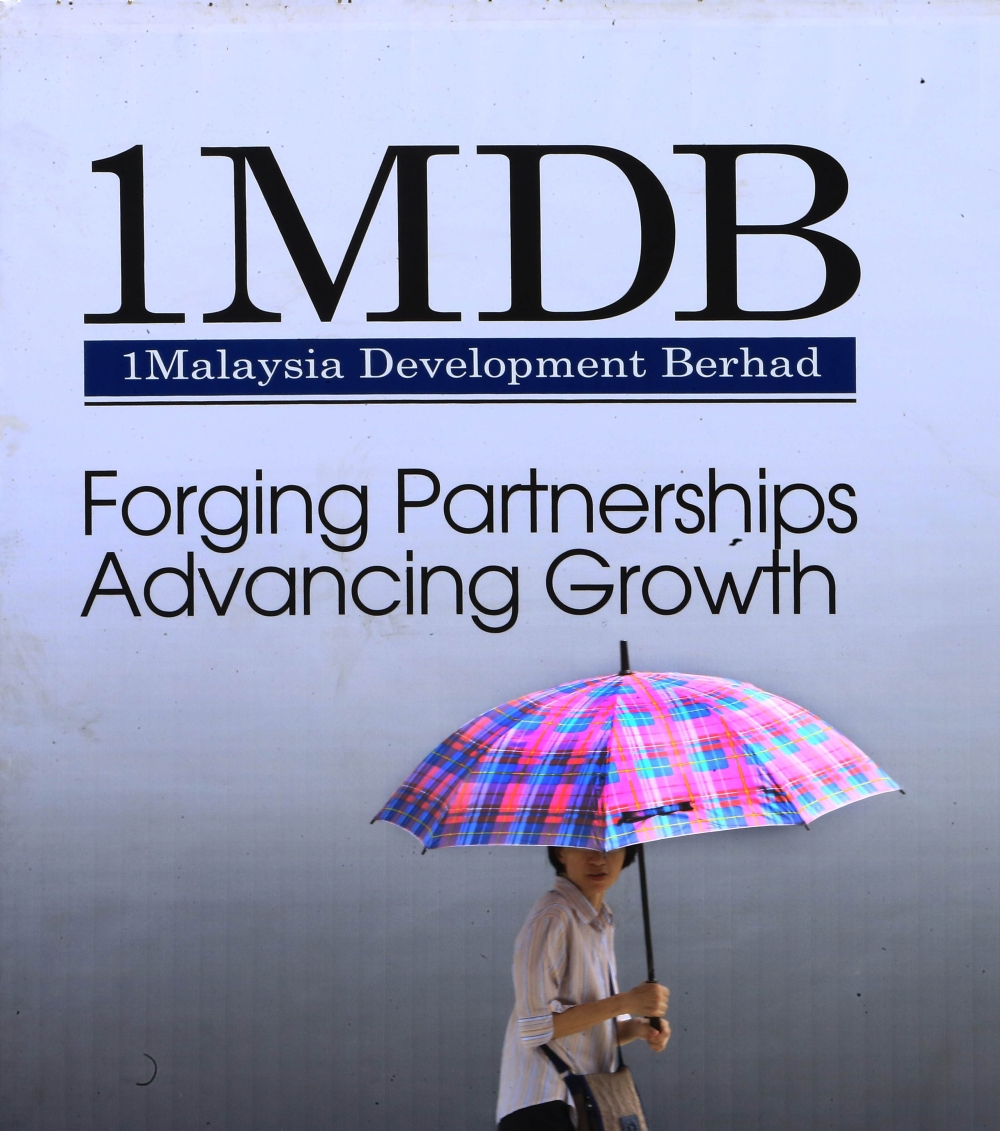
How a jailed former banker and a lone British journalist broke a story that shook the world by Randeep Ramesh. Published by The Guardian on 28 July 2016.
On 22 June 2015, Xavier Justo, a 48-year-old retired Swiss banker, walked towards the front door of his brand new boutique hotel on Koh Samui, a tropical Thai island. He had spent the past three years building the luxurious white-stone complex of chalets and apartments overlooking the shimmering sea and was almost ready to open for business. All he needed was a licence.
Justo had arrived in Thailand four years earlier, having fled the drab world of finance in London. In 2011, he and his girlfriend Laura toured the country on a motorbike and, two years later, they got married on a secluded beach. The couple eventually settled down in Koh Samui, a tourist hotspot, just an hour’s flight south of Bangkok. After trying out a couple of entrepreneurial ventures, Justo eventually decided that he would go into the hotel business. He bought a plot with an imposing house and began building: adding a gym, villas and a tennis court.
That June afternoon, he was expecting a visit from the tourism authorities to sign off on the paperwork. Instead, a squad of armed Thai police burst through the unlocked door, bundling Justo to the ground. The officers tied their plastic cuffs so tightly around Justo’s wrists that he bled on the dark tiled floor. The police quickly moved into his office, ripping out the computers and emptying the filing cabinets.
After two days in a ramshackle local jail, Justo was flown to Bangkok and paraded before the media, in a press conference befitting a mafia kingpin. Still wearing shorts and flip-flops, he was flanked by four commandos holding machine guns, while a quartet of senior Royal Thai Police officers briefed the assembled reporters on the charges against him.
Justo was charged with an attempt to blackmail his former employer, a little-known London-based oil-services company named PetroSaudi. But behind this seemingly mundane charge lay a much bigger story.
Six months earlier, Justo had handed a British journalist named Clare Rewcastle Brown thousands of documents, including 227,000 emails, from the servers of his former employer, PetroSaudi, which appeared to shed light on the alleged theft of hundreds of millions of dollars from a state-owned Malaysian investment fund known as 1MDB.
The documents that Justo leaked have set off a chain reaction of investigations in at least half a dozen countries, and led to what Loretta Lynch, the US attorney general, described last week as “the largest kleptocracy case” in US history.
According to lawsuits filed last week by the United States Department of Justice (DoJ), at least $3.5bn has been stolen from 1MDB. The purpose of the fund, which was set up by Malaysia’s prime minister, Najib Razak, in 2009, was to promote economic development in a country where the median income stands at approximately £300 per month. Instead, the DoJ alleged that stolen money from 1MDB found its way to numerous associates of Prime Minister Najib, who subsequently went on a lavish spending spree across the world. It also accused Najib of receiving $681m of cash from 1MDB – a claim he denied. Money from 1MDB, the US also claimed, helped to purchase luxury apartments in Manhattan, mansions in Los Angeles, paintings by Monet, a corporate jet, and even financed a major Hollywood movie.
The US justice department breaks the alleged theft down into three distinct phases: the first $1bn defrauded under the “pretence of investing in a joint venture between 1MDB and PetroSaudi”; another $1.4bn, raised by Goldman Sachs in a bond issue, misappropriated and fraudulently diverted to a Swiss offshore company; and $1.3bn, also from money Goldman Sachs raised on the market, which was diverted to a Singapore account.
“A number of corrupt 1MDB officials treated this public trust as a personal bank account,” Lynch told the press last week. “The co-conspirators laundered their stolen funds through a complex web of opaque transactions and fraudulent shell companies, with bank accounts in countries around the world, including Switzerland, Singapore and the United States.” PetroSaudi, which is not a party to the lawsuit, denied the US allegations and said that the DoJ’s asset-forfeiture claims are “no more than untested allegations”.
Najib, who has used every ounce of his power to obstruct investigations into the scandal – a charge he denies – is not mentioned by name in the US lawsuits, which refer to him as “Malaysian Official 1”. But the man at the centre of the intricate swindle depicted in the US lawsuits is an adviser to Najib: Jho Low, a Harrow-educated 29-year-old friend of the prime minister’s stepson. Low, a babyfaced young man who likes to party with Lindsay Lohan and Paris Hilton – and calls his Goldman Sachs banker “bro”, according to the DoJ – is accused by the US of masterminding the theft of $2bn from 1MDB, which was sent to bank accounts in Switzerland, Singapore and the Virgin Islands. Low has said that he has not broken any laws and was not being investigated.
Low’s sidekick is Riza Aziz, Najib’s stepson. Riza produced The Wolf of Wall Street – Martin Scorsese’s tale of corruption, decadence and greed – and both he and Low were thanked by name in Leonardo DiCaprio’s Golden Globes acceptance speech for best actor. In 2011, Low took a 20% stake in EMI, the world’s largest music-publishing company, for $106m – in the same year, he bought a $30m penthouse for his father at the Time Warner Center in Manhattan, overlooking Central Park. Riza’s Hollywood production company has said: “There has never been anything inappropriate about any of Red Granite Pictures or Riza Aziz’s business activities.”
All this and more is laid out in the US filing, which details claims of an amazing heist, carried out by conspirators who rinsed billions from the people of Malaysia through offshore accounts and shell companies in tax havens such as the Seychelles and British Virgin Islands. The scale of the enterprise echoes Balzac’s maxim that behind every great fortune lies a great crime.
The global effort to uncover Malaysia’s missing billions began with Xavier Justo. He leaked 90GB of data, including 227,000 emails, from his former employer PetroSaudi, an oil services company that had signed the first major deal with 1MDB. (PetroSaudi denies any wrongdoing.) Without these files, there would have been no reckoning.
Justo’s connection to PetroSaudi was his long friendship with one of the company’s two founders, a Saudi national named Tarek Obaid. The two men had met back in the late 1990s, when they both partied regularly in the nightclubs of Geneva. By 2006, the two men were inseparable: Justo had become an established businessman, running a large financial services firm, Fininfor, and the owner of a Geneva nightspot named the Platinum Club. Justo regarded Obaid as a “younger brother”, and in 2008, lent him $30,000 and a desk in the Fininfor offices to help start up PetroSaudi.
Obaid and Justo were an unlikely pair, brought together by a love of the high life. Justo, the son of Spanish immigrants to Switzerland, did not go to university. Obaid is a graduate of Georgetown University’s prestigious School of Foreign Service. His brother, Nawaf, served as a special adviser to the Saudi ambassador to the UK. Obaid’s PetroSaudi co-founder, Prince Turki bin Abdullah, is the seventh son of the late King Abdullah bin Abdulaziz, who ruled Saudi Arabia from 2005 until his death in 2015.
When Justo left Geneva in 2009, PetroSaudi was little more than a name on a calling card, formally incorporated in London with an address at an anonymous business unit near Victoria. Two years later, it had taken in $1.83bn.
PetroSaudi’s business was access capitalism: opening doors with the help of friends in high places. The basic idea was to capture a piece of the huge oil revenues being generated by state-owned firms in developing countries – treasure chests waiting to be unlocked by a firm that was a “vehicle of the Saudi royal family”, which could count on the “full support from the kingdom’s diplomatic corps”. PetroSaudi told potential partners that it controlled oil fields in central Asia, which it would put up as collateral to secure cash from state investors.
This was the pitch that landed PetroSaudi’s founders a meeting with the Malaysian prime minister in August 2009. Aboard a 92m megayacht off the coast of Monaco, Obaid and Prince Turki spent the day with Najib, his adviser Jho Low, and other members of the prime minister’s family. Snapshots taken at the meeting have the look of a holiday cruise – baseball caps and shorts – but their discussion was serious business. What resulted was a decision for Low and Obaid to work together on a deal that would allow them both to control mind-boggling sums of money.
Although Low held no formal position in the Malaysian government, he had become a trusted confidant to the prime minister. Despite his youth, Low had been instrumental in working with Goldman Sachs to set up a sovereign wealth fund to invest the revenues of an oil-rich Malaysian state.
Around the time that Low and Najib went boating with the PetroSaudi founders, the Malaysian central government took control of the wealth fund – which was soon renamed as 1Malaysia Development Berhad (1MDB) and given a mandate to promote economic development in Malaysia. The fund had more than $1bn to spend, and Prime Minister Najib had the sole power to approve investments and to hire and fire board members and managers. Low appeared to facilitate transactions – according to the DoJ, he even attended board meetings of 1MDB and acted as a link with the PM.
The new fund’s first major deal was signed a few weeks after the meeting with PetroSaudi – a $2.5bn joint venture agreement between PetroSaudi and 1MDB, inked during a visit by Najib to Saudi Arabia in September 2009. The press release said that the joint venture would “make strategic investments in high-impact projects” and “underscored the confidence Saudi Arabia has in Malaysia”.
But, according to the US justice department, the deal was merely a “pretence” for “the fraudulent transfer of more than $1bn from 1MDB to a Swiss bank account” controlled by Low – “a 29-year-old with no official position with 1MDB or PetroSaudi”. PetroSaudi has always maintained that all 1MDB funds were paid to entities owned by its shareholders.
The multibillion-dollar joint venture deal was completed with extraordinary speed – in less than a month. Shortly after the yacht meeting, on 28 August 2009, Obaid had introduced Low to Patrick Mahony – the company director who handled PetroSaudi’s business affairs. According to documents seen by the Guardian, Low and Mahony met for lunch in New York on 9 September to discuss the joint venture.
After dining at Masa – a sushi restaurant where the set menu costs $540 a head – Mahony emailed Low the next day with an offer: “We know there are deals you are looking at where you may want to use PSI [PetroSaudi] … we would be happy to do that. You need to let us know where.” PetroSaudi said the documents seen by the Guardian are unreliable, stolen, fake and that they have been selectively quoted.
Less than three weeks later, the deal was done. PetroSaudi would contribute $1.5bn in oil and gas assets to the joint venture, while 1MDB would inject $1bn in cash.
According to the US court filing, 1MDB transferred $300m into an account belonging to the PetroSaudi joint venture, but the remaining $700m was sent to a Swiss account at RBS Coutts, controlled by a Seychelles-registered shell company named Good Star. The US justice department complaint alleges that Jho Low, and not PetroSaudi, was the beneficial owner and sole authorised signatory of Good Star. US authorities claim that officials at 1MDB provided false information to banks about the ownership of the Good Star account in order to divert the $700m.
In documents seen by the Guardian, on 30 September 2009 PetroSaudi appears to direct that the $700m be paid into an account controlled by the company – but three days later, when the compliance department at RBS Coutts requested further details about the name of the beneficiary account, the address given by 1MDB was the Good Star account. On the same day, 2 October, Low emailed Mahony to say “Shld be cleared soon”. PetroSaudi told the Guardian: “No money put into the joint venture by 1MDB was misappropriated or is missing. Its investment was repaid with profit … All transfers from 1MDB were paid with the full approval of the 1MDB board.”
According to documents seen by the Guardian, the Good Star transaction made Obaid, then 32, and Mahony, then 33, very rich men. Records indicate that on 30 September 2009, Good Star agreed to pay $85m to Obaid, which the Seychelles company described as a fee for “brokering services”. The money was deposited into Obaid’s Swiss JP Morgan account. At the same time, emails and legal documents indicate that Mahony was given a contract as “investment manager” for Good Star. On 20 October, Obaid emailed his contact at JP Morgan to request that $33m be transferred into an account belonging to Mahony.
Four days later, Mahony began discussions to set up an offshore company to buy a £6.7m townhouse in Notting Hill – and by 12 November, contracts for the house had been exchanged. The former banker created a numbered bank account in Switzerland, and all payments for the purchase were made from this account, via a British Virgin Islands company that Mahony had set up.
In response to questions from the Guardian, PetroSaudi said the payment to Obaid was not a brokerage fee and that the transfer of $33m to Mahony had nothing to do with the PetroSaudi-1MDB joint venture.
Laura and Xavier Justo were blissfully unaware of their friend Obaid’s changing fortunes. The couple were sunning themselves on Thailand’s Andaman coast in December 2009 when Obaid rang Justo offering him a director’s position in London with PetroSaudi. He told Justo the company had become an overnight success, but it needed someone who could help it grow.
Justo rejected Obaid’s initial offer, but he was eventually persuaded by the temptation of a well-paid “adventure”. According to Justo, Obaid promised him a salary of £400,000, “millions in bonuses” and the perk of a £10,000-a-week flat in Mayfair, central London. Justo pitched up in London in spring 2010, and by June was a PetroSaudi director. But he was kept out of the lucrative Asian business. Instead, Justo, a native Spanish speaker, was tasked with launching a new operation in Venezuela, and spent much of 2011 flying between London and Caracas.
Between September 2010 and May 2011, 1MDB agreed to lend an additional $830m to the joint venture with PetroSaudi – bringing 1MDB’s total investment to $1.83bn. Of these new payments, US officials allege, $330m was paid into the Swiss account they say was controlled by Low, on the basis of a request by Obaid – who is identified in the US legal complaint as “PetroSaudi CEO”.
Emails and bank records seen by the Guardian suggest that in the nine months from September 2010, Obaid transferred $77m from his Swiss JP Morgan account to his PetroSaudi co-founder, Prince Turki bin Abdullah. According to the US authorities, banking records show that in the spring of 2011, Prince Turki also received $24m from the Good Star account controlled by Low – and that “within days”, $20m from these funds was transferred to an account belonging to the Malaysian prime minister, Najib.
Meanwhile, Low was becoming known on the New York club scene as a fixer for the global super-rich – snapped by paparazzi swigging magnums of Cristal with R&B singers and Hollywood stars. According to US authorities, Low spent $100m from the joint venture transactions on properties in Hollywood and $40m on New York apartments. The funding for The Wolf of Wall Street, the US complaint alleges, can be directly traced to the billion dollars diverted from the PetroSaudi joint venture.
In the meantime, Justo was growing disaffected with working conditions at PetroSaudi. According to his wife, Laura, the first sign of discontent was his discovery that his salary payments were only about half of what Justo said Obaid had offered him – a slight that was compounded when he learned that the promised multimillion-pound bonus would be considerably less than that – more like six figures than seven.
There were other niggles, too. He complained to Laura that he was often paid late, and sometimes not at all. He claimed that he ended up paying rent on the flat in Mayfair that was supposed to be covered by his employers.
At first, Justo told Laura, he thought these were just mishaps – nothing malicious, just poor corporate bookkeeping. But he became increasingly dismayed by Obaid’s behaviour. Justo told friends that Obaid had become “arrogant” after striking it rich. Justo was especially disturbed by what he described as changes in his younger Saudi friend – telling other people that Obaid had become irrational, and displayed “uncontrollable” rage.
Justo and Obaid’s long friendship, stretched to breaking point over 12 months of highly charged corporate life, finally snapped. At the end of 2010, Justo missed a flight for an important meeting. He apologised to Obaid, but according to Justo, his friend “went mad”, sending him a stream of abuse, via text messages and emails.
Sick with worry, Justo decided to resign in March 2011. In the angry email exchanges that followed, Obaid called Justo “arrogant” and a “smart ass”. In April, things came to a head in Mayfair. Amid the marble, dark leather and metal art deco detailing of the exclusive Connaught hotel bar, Mahony and Justo hammered out the terms of his departure. According to Justo, Mahony had agreed to pay him about 6.5m Swiss francs (£5m) in severance. However, in the midst of a heated conversation, Mahony’s phone rang. It was Obaid, who apparently told Mahony to settle on 5m Swiss francs (£3.85m). Justo, who had poured his heart out to Mahony, telling him he was at his “lowest point emotionally”, shed tears. A day later, Justo claims that he was told his severance package would, in fact, be 4m Swiss francs (£3m).
As the rancour set in, Justo took a copy of the data on the PetroSaudi servers. In September 2013, a little more than two years after he had left PetroSaudi, Justo sent a fateful email to Mahony. Justo was insistent that he be paid what was owed to him, warning that he had a file of information on PetroSaudi. “The official side paints a nice picture but the reality is commissions, commissions, commissions,” he wrote.
In the furious exchanges that followed, Mahony accused Justo of blackmail. Mahony presciently told his former colleague: “What troubles me so much is the way in which I see this situation ending – with the destruction of you.”
A few months earlier, over a Chinese meal in London, the journalist who would break open the 1MDB scandal first heard rumours about an extraordinary heist in Malaysia. Clare Rewcastle Brown met a contact at a restaurant in Bayswater who showed her screen grabs of internal documents from PetroSaudi: on a single printed page, there were highlights of PetroSaudi’s dealings with 1MDB, under the heading “Thousands of documents related to the deal (emails, faxes and transcripts)”. She recognised the names and the deal. Her heart skipped a beat. “A bomb went off in my head,” Brown recalled. She knew right away that this was a huge story.
Rewcastle Brown is a classic British rebel at the heart of the establishment. She was born on the island of Borneo – part of which now belongs to Malaysia – when it was still part of the British empire, where her father was a colonial policeman and head of the local intelligence service. Her brother-in-law is the former British prime minister Gordon Brown. After working as a reporter for the BBC, in 2010 Rewcastle Brown set up Sarawak Report, a website dedicated to uncovering corruption in the place of her birth.
Working out of her tiny kitchen in central London, she published story after story exposing corruption in the timber and oil industries that were despoiling the country’s rainforests for profit. Her email was hacked and she received death threats, but she carried on, regardless. Early in 2013, Malaysian politicians labelled her an “enemy of the state”. Rather than be cowed, she considered this a badge of honour. In person, Rewcastle Brown is a curious mix of the bawdy and the brave, almost to the point of recklessness. Her mantra: “I just want the story.”
After the meeting in Bayswater, Rewcastle Brown knew she needed to get the 1MDB documents. The first hurdle was that the source of the PetroSaudi papers apparently wanted millions for the information. It was money she did not have.
Another stumbling block was that no journalist in Malaysia wanted to touch the story. In Malaysia, Prime Minister Najib had just won a tightly contested election, and was flush with power. Rumours were swirling around the cache of PetroSaudi documents – some said the Russian mafia was behind the data dump, while others speculated that it might be an elaborate trap, set by the prime minister to ensnare his critics.
Undeterred, Rewcastle Brown arranged with her contact to meet the source in Thailand. In October 2013, she pitched up at the lobby of the Plaza Athénée hotel, in Bangkok. She had told her husband she was hoping to meet a “balding bespectacled short Swiss guy”. Instead, into the foyer stepped Xavier Justo – muscular and 6ft 6in tall. Rewcastle Brown was faced with a “physically imposing, extremely elegant” man. “Oh my God,” she thought. “This guy is going to duff me up.”
But Justo admitted that he was just as scared as she was. According to Rewcastle Brown, he seemed “very, very nervous” and repeatedly warned her that “the people we were dealing with were ruthless, had huge amounts of money and were very, very powerful – and they could do what they liked to us”.
Justo told Rewcastle Brown that he wanted $2m in exchange for the PetroSaudi-1MDB documents. It was, he said, the money he should have been paid when he left PetroSaudi.
Although he shared a few documents at the meeting, Justo was adamant: no cash, no data. Rewcastle Brown needed to find a rich person prepared to pay for the papers.
At around this time, concerns about 1MDB had begun to spread in Malaysia. Financial analysts pointed out that the fund was not generating enough cash to cover interest payments on the billions of dollars of debt it had acquired. The hundreds of millions that had been spent on art work, jewellery, real estate, gambling and parties did not realise any return on the “investment”. By 2014, Prime Minister Najib’s political opponents had taken to taunting him with the accusation that the wealth fund should be renamed “1Malaysia’s Debt of Billions”.
In August 2014, Najib received another political blow. Mahathir Mohamad, the towering figure of modern Malaysian politics who served as prime minister from 1981 to 2003, announced that he was withdrawing support for Najib, his former protege. In the weeks that followed, Mahathir became more vocal in his criticism, warning that 1MDB was adding to Malaysia’s dangerously high debt levels.
This warning went unheeded. The fund’s debt swelled. By November 2014, 1MDB owed almost $11bn. Najib, who chaired the fund’s advisory board, appeared unconcerned, telling the state news agency that the government was not liable for the debt if the fund went bankrupt.
As the crisis deepened, Rewcastle Brown continued her quest for a person willing to pay Justo for the PetroSaudi-1MDB documents. She noticed that some of the most searching reporting on the scandal had appeared in Malaysia’s best-selling business weekly, the Edge. Sensing that she may have found a wealthy ally, Rewcastle Brown contacted the Edge’s owner, Tong Kooi Ong, a former banker turned media tycoon, who owned a number of business publications.
In January 2015, Tong, Rewcastle Brown and Justo met in a five-star Bangkok hotel, the Fullerton. Tong booked a conference room, and brought a number of IT experts, as well as the editor of the Edge, Kay Tat. At the meeting, Justo laid out the 1MDB joint venture, making the same claims that the US Department of Justice would set out 18 months later: namely that hundreds of millions of dollars that were intended for economic development in Malaysia had instead been diverted into a Seychelles-based company. The man at the centre of the transaction was alleged to be Najib’s adviser and family friend, Jho Low.
It was a potentially huge scoop. Tong agreed to pay Justo $2m. Tong and Rewcastle Brown were immediately handed disk drives with the data. But the payment was never made. Justo did not want the money in cash, and he worried that a large transfer of funds into his account would look suspicious. Tong offered Justo one of his Monets as collateral – but Justo declined, and said “no, I trust you”. Rewcastle Brown finally had the documents she had been chasing for 18 months.
On 28 February 2015, Rewcastle Brown posted the first big story online – under a typically unrestrained headline: “HEIST OF THE CENTURY!” The article claimed to show how $700m had disappeared from the 1MDB joint venture and found its way into various offshore companies and Swiss bank accounts.
The impact of the article was felt around the world. In the US, law enforcement officials who had been alerted to reports that Low was spending huge amounts on New York apartments now had a fix on the possible source of his wealth.
While researching the story, Rewcastle Brown had teamed up with the Sunday Times, which helped her decrypt the files Justo had given to her. The paper ran an interview with Mahathir, the former Malaysian prime minister, who called for an immediate investigation and a full audit. “Somebody must be doing something stupid to part with $700m for no very good reason as far as I can see,” he said.
In Malaysia, the response was immediate. On 1 March 2015, 1MDB’s management claimed that it had exited the joint venture in 2012, and that it had received back its investment in full, with an additional profit of $488m. PetroSaudi claimed that the $700m had all gone to “PetroSaudi-owned entities” – denying, in other words, that companies controlled by Jho Low had received payments in the deal.
Not long before Rewcastle Brown’s story broke, 1MDB’s bonds had been effectively downgraded to junk. After another £200m of Malaysian government funds were required to plug a hole in 1MDB’s finances, Najib bowed to the inevitable and ordered investigations by the country’s auditor general and the parliamentary accounts committee. Soon, the country’s central bank and anti-corruption agency were also looking at 1MDB. Malaysia’s top policeman was reported as saying that the prime minister would also be investigated.

Najib tightened his grip on power. As prime minister and finance minister, he wielded enormous authority: in April, the government pushed through harsh penalties and restrictions on free speech, particularly on social media. Five executives of Tong’s The Edge Media Group – which had also published details of the PetroSaudi deal – were arrested for sedition. The government also introduced a new law, ostensibly aimed at terrorists, which allowed suspects to be detained indefinitely. In July 2015, the Edge weekly was banned from publishing.
Although the scandal only seemed to be getting bigger, it had not ensnared Prime Minister Najib personally. Then, on 2 July, Rewcastle Brown and the Wall Street Journal reported that Malaysian government investigators had discovered that $681m from banks, agencies and companies with ties to 1MDB had been deposited in Najib’s private accounts in 2013. A few days later, investigators raided the offices of 1MDB.
Najib was now at the centre of a corruption probe relating to allegations that billions of dollars had disappeared from a Malaysian investment fund he controlled. Deputy Prime Minister Muhyiddin Yassin, once a supporter of Najib, publicly called on him to answer questions about the fund. It seemed that Najib was cornered.
On the morning of Monday 28 July, the attorney general, Abdul Gani Patail – a party loyalist who had previously gone after the prime minister’s opponents – arrived at his office expecting to finalise corruption charges against Najib. The indictment, which Rewcastle Brown later obtained and published, would have charged the prime minister with corruption resulting from the investigations into 1MDB.
The attorney general never got to press those charges. On reaching his office, he was summarily dismissed by a civil servant. In a public statement, Najib said the country’s top legal officer was too ill to continue in the role. Also relieved of their posts were the head of special branch and the deputy prime minister. Meanwhile, four members of the investigating parliamentary accounts committee were promoted, without any choice, to cabinet positions, which left them with no power to continue investigating, and the committee’s work was declared suspended. The next day, a mysterious fire swept through police headquarters, where records of white-collar crimes were kept.
It seemed that Najib was in control again.
The crackdown revealed a ruthless side to Najib. However, there was a loose end that could unravel everything: Xavier Justo. Not only had Justo leaked information about 1MDB’s dealings with PetroSaudi, he was also a potential star witness in any future court proceedings about the financial scandal.
After Justo was arrested for blackmail and flown to Bangkok in June 2015, he was placed in a cell with 70 other prisoners. The floor was covered with sweat and urine, and the room was so tightly packed that prisoners could not sleep on their backs. According to Justo’s wife Laura, her husband’s first foreign visitor was his former friend, colleague and PetroSaudi director, Patrick Mahony. Smooth and charming, Mahony flashed a smile and said he was there to help.
Laura says that Mahony offered Justo a deal: confess and plead guilty, and PetroSaudi will get you out of here by the end of the year. Justo reluctantly agreed. He signed a confession – without a lawyer present – which claimed that he had attempted to blackmail his former employers, and apologised to Mahony and Obaid “for the harm stress and anxiety I caused them”. According to Laura, a man who claimed to be a Scotland Yard detective – and later told her he had been hired by PetroSaudi – took down Justo’s confession. (PetroSaudi told the Guardian that Justo had “illegally obtained commercially sensitive, confidential and private documentation” and was in prison for “blackmail and extortion”.)
Justo was sentenced on 17 August 2015 at Southern Bangkok criminal court. At the trial he was granted a translator, but his lawyer did not turn up, sending an assistant instead. The trial and sentencing took 15 minutes. Justo got three years in a Thai jail for attempting to blackmail a UK company out of $2m.
Life behind bars in Klong Prem Central prison, where Justo is incarcerated, is not for the fainthearted. In a city where temperatures rarely drop below 26C, Justo shares a cramped “VIP” cell with 25 other prisoners. Breakfast is at 7am. Water is rationed. Prisoners have no food after 3pm. There is a small bathroom area at the rear of the cell, which consists of a tap and a hole in the floor for a lavatory.
As 2015 wore on and it became clear that her husband was not going to be out of jail by the end of the year, Laura grew increasingly suspicious of her contacts at PetroSaudi. A series of stories in the Swiss and Malaysian press purporting to tell Justo’s side of the story depicted him as an unwitting pawn in a political plot against the Malaysian prime minister. Things were not getting better for Justo – they were getting worse. In his prison cell, Justo was now sleeping on a thin blanket – his mattress was withdrawn a few months after he arrived, as was his exercise hour.
Laura came to believe that Justo was a victim of a deceit by his former friends, who tricked him into confessing and handing over copies of PetroSaudi’s servers, in an attempt to protect themselves and their Malaysian associates by burying the case. In May 2016, in a last-gasp effort to save her husband, Laura turned to the one person who she knew Justo trusted: Rewcastle Brown, who brought her to the Guardian.
When I met Laura in June 2016, she was at first calm and composed, but broke into tears when speaking about her husband, her voice cracking with emotion. Justo has not seen their son since he was eight months old. “I only want justice to be done,” Laura recently wrote in an email. “Xavier was no thief, he was only asking for what he had been promised. Even through this darkest and most difficult time of his life, which is right now, he writes to me that he is keeping strong for our son and I – that he will fight for us whatever it takes.”
Since reaching out to Rewcastle Brown and the Guardian, Laura has handed over notes smuggled out of prison in which Justo says he has been framed. Laura believes that Patrick Mahony of PetroSaudi has controlled Justo’s life behind bars, deciding how comfortable his living space would be and who could visit him. (Foreign prisoners have a list posted outside the prison of permitted visitors. Mahony is listed as number two. Laura is number five.)
Laura says she has emails and WhatsApp messages, as well as recordings of phone calls from last year that suggest that Mahony is under increasing pressure from Najib, on one hand, and from US and Swiss investigators combing through 1MDB’s deals, on the other.
In taped telephone conversations with Laura, Mahony appears obsessed with Rewcastle Brown, whom he refers to as a “bitch”. In a recorded conversation with Laura from November 2015, Mahony refers obliquely to a powerful person whom he claims could help reduce Justo’s sentence: “I told you the other evening, who the ultimate person is controlling this, and I am due to have another meeting with him soon … This guy is still stressed because it’s his political career on the line. He’s in deep shit and that’s all he cares about, nothing else.”
When Laura asks what she should tell her husband, Mahony says: “The only way that you can show that you’re on his side – to be a team player – is if you’re ready to put yourself out in the media. You are ready to denounce all the people who are conspiring against him … I am not going to lie to you … You can help the situation or you cannot help the situation.”
When Laura presses for Justo’s release, Mahony snaps. “I’m still dealing with this shit every day. You need to remember we are all in the shit. I know he’s in prison and you are alone with the baby. And I looked at you the other day and I told you I feel for you. But me, I’m also in the shit. And a lot of other people are in the shit. A prime minister of a country is in deep shit because he has been put in this shit.”
By December, Mahony admits in another phone call that he had been to the US, where “the FBI is looking at all this shit” and that he had been pulled in by the Swiss attorney general’s office. “The Swiss are continuing to really give us shit … They know they have nothing … But they say they are fearful of being accused of not doing anything.” PetroSaudi said that it will cooperate with any official authority in any jurisdiction and added that it is not the subject of any investigation in any jurisdiction. Mahony has not been interviewed by US or Swiss officials.
The consequences of Justo’s leaks are still reverberating around the world. When the US Department of Justice laid out the case against 1MDB last week, it pulled no punches. “The Malaysian people were defrauded on an enormous scale,” said Andrew McCabe, the FBI’s deputy director. US officials told the Guardian that any party who wanted to contest the attorney general’s claim must file a response in a federal court within 60 days to answer the factual allegations.
In a separate case, the DoJ is also investigating whether Goldman Sachs violated US banking law in its handling of $6.5bn in bond offerings that it carried out for 1MDB. The Wall Street behemoth earned $593m in fees for the issue. Goldman Sachs denied any wrongdoing. The bank told the Guardian: “We helped raise money for a sovereign wealth fund that was designed to invest in Malaysia. We had no visibility into whether some of those funds may have been subsequently diverted to other purposes.”
Most important was that the DoJ allegations directly contradicted repeated assertions by Prime Minister Najib about the origins and purpose of hundreds of millions of dollars that ended up in his personal bank accounts – which he had claimed was a gift from a Saudi benefactor.
The DoJ filing was released at a critical moment for democracy in Malaysia. On 1 August, a draconian national security act introduced by Najib comes into force – allowing the Malaysian government to establish martial law in any designated geographic area. The law will dramatically expand the powers of Malaysia’s security forces – allowing for arrests, searches and seizures without warrants and the bulldozing of buildings.
But in the rest of the world, investigations into the sprawling corruption scandal are continuing to expand. In Switzerland, the US justice department identified RBS Coutts and Rothschild Bank as conduits for transactions in the corruption complaint. The Swiss attorney general is probing the billion-dollar fraud. The banks declined to comment when contacted by the Guardian.
Singapore found “lapses and weaknesses” in anti-money-laundering controls at major banks. For the first time in the island state’s history, the authorities shut down a merchant bank. In April the United Arab Emirates froze hundreds of millions of dollars in accounts held by alleged conspirators in the 1MDB fraud and banned the account holders from travelling abroad.
The board of 1MDB said that it was “confident that no wrongdoing had been committed” but as a “precautionary measure”, its accounts for 2013 and 2014 should no longer be “relied on by any party”. Najib has said that he did not commit “any offence or malpractice”. His attorney general cleared him of corruption earlier this year.
For now, the man whose revelations enabled the exposure of this vast fraud remains in a Bangkok prison. Xavier Justo was motivated by a mixture of morality and revenge – the desire to settle scores with a friend who betrayed him. To get even, he chose to blow the whistle, for a price. He may not go down in history as a hero who selflessly risked ruin to expose the truth. But in doing so, he did unwittingly sacrifice himself.